

Looking for affordable SEO services in the UK usually starts the same way a Google search, five open tabs, five nearly identical pricing pages. Every agency claims to be different. Most aren’t. This guide is written to help you tell a real SEO package apart from a repackaged template, and why local SEO packages deserve more attention than most UK businesses give them.
This is based on hands-on work with small and medium UK businesses across a few different sectors, combined with patterns documented widely across the SEO industry not one case study dressed up as universal truth. Where something below depends heavily on a business’s market, competition, or starting point, that’s flagged rather than glossed over.
Want SEO done properly?
Email: codewithahmad363@gmail.com LinkedIn: Ahmad Khan No script, no pressure — just a straight conversation about your site.
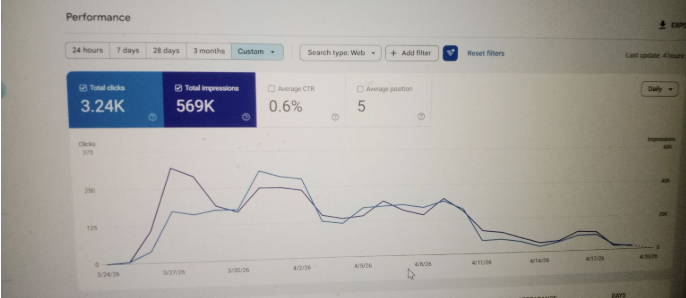
Our some clients projects :
The Problem With How “Affordable SEO” Gets Sold
There’s an assumption that affordable SEO services in the UK must mean second-rate work. That assumption exists because plenty of budget agencies do cut corners spun content, link farms, mass-produced blog posts. But the price tag isn’t what causes that. Bad process does.
A smaller team charging fairly can, in many cases, outperform a bloated retainer at the higher end of the UK market (some agencies charge upwards of £3,000–£4,000 a month), simply by not wasting budget on things that don’t move rankings. This isn’t true across the board a large, competitive national market can genuinely need a bigger budget but for most local and small-to-medium businesses, spend and results don’t scale as directly as the pricing pages suggest. What separates genuinely affordable SEO from cheap SEO:
- Strategy before spend — money goes toward the handful of actions that actually affect rankings.
- No forced long contracts — a 12-month lock-in before you’ve seen month-one results is a warning sign.
- Reporting you can actually read — plain language, not padded to look busy.
- Honesty about timelines — real SEO takes months, not days. Anyone promising page one in two weeks is usually about to do something that gets the site penalised.
Cheap and affordable aren’t the same thing — one cuts corners, the other cuts waste.
What a Proper SEO Package Should Include
The term “SEO package” gets thrown around loosely. Some agencies sell it as a fixed bundle — X posts, Y backlinks, Z keywords — regardless of what the business actually needs. A florist in Cardiff and a B2B software company in London shouldn’t be sold the same bundle just because it fits a pricing tier.
Even so, most solid packages share a similar structure underneath:
- Technical foundation — crawl errors, broken redirects, slow load times, mobile usability. Unglamorous, but nothing else works without it.
- Keyword and intent research — separating buy-ready searches (“SEO packages UK”) from research-stage ones (“what is SEO”), and weaving in related terms naturally rather than stuffing them in.
- On-page optimisation — titles, meta descriptions, header structure, and internal linking, done with reasoning behind each choice rather than a generic checklist.
- Content built to answer real questions — this is where a lot of packages fall apart. We’ve come across sites where a previous agency had published dozens of near-identical, short posts targeting overlapping keywords, with little to show for it in rankings or traffic. Not every thin-content strategy fails this badly, but depth and specificity tend to outperform volume, especially once a niche gets competitive.
- Ongoing adjustment — rankings move, competitors shift tactics. A package without monthly review isn’t a strategy; it’s a one time setup with a recurring invoice.
A package should adapt to the business. If it doesn’t, it’s a template with your logo on it.
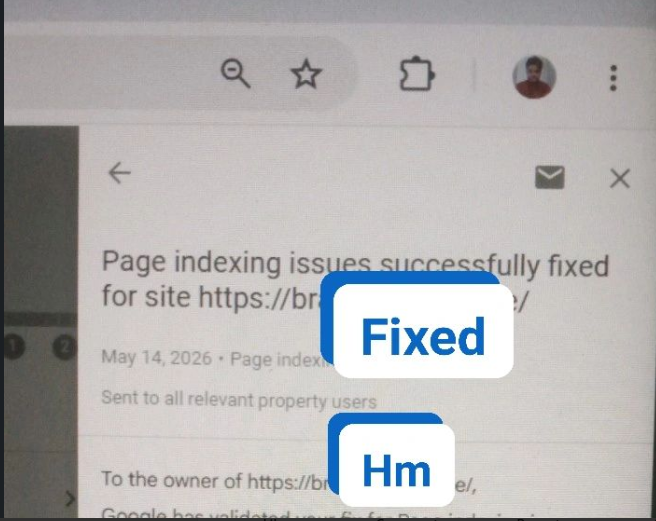
Some indexing issue fixes :
Building Links Without the Shortcuts
Link building is the part of SEO packages most likely to be either skipped entirely or done badly directory spam, paid link networks, or bulk “guest post” services that hand out the same generic article to fifty sites at once. Google has gotten considerably better at spotting this pattern, and sites that lean on it tend to see short-term gains followed by a longer-term correction.
What tends to hold up instead:
- Digital PR — pitching genuinely useful data, tools, or commentary to journalists and industry publications, so the links come from coverage rather than payment.
- Resource-based outreach — creating something genuinely worth linking to (an original guide, a local market study, a free tool) and reaching out to sites where it’s relevant.
- Local and industry citations — listings in chambers of commerce, trade bodies, and regional directories, which matter more for local SEO packages than people expect.
- Relationship-based partnerships — suppliers, past clients, and industry contacts who’ll link naturally if asked, rather than cold outreach to strangers.
The honest trade-off: link building done properly is slower and less predictable than buying links in bulk. It’s also the version that doesn’t put the site at risk when Google runs its next update.
Local SEO Packages: The Piece Most Businesses Get Wrong
A lot of UK SEO campaigns treat every business like it’s competing nationally, when most small and medium businesses actually need to win a specific city, town, or postcode. That’s what local SEO packages are for and skipping this step is one of the most common mistakes we see.
Industry data has consistently shown “near me” and by-city searches making up a large and growing share of overall search activity, and these searchers are often close to booking rather than just browsing. Exact figures shift year to year and vary by sector, but the direction is consistent: a business not optimised for local search is effectively invisible to a meaningful slice of nearby customers, regardless of how well it ranks nationally.
What belongs in a local SEO package:
- Google Business Profile optimisation — accurate categories, service areas, photos, regular updates. Often the single highest-return action a local business can take.
- NAP consistency — Name, Address, Phone matching exactly across the site and every directory listing. Small mismatches here quietly undermine rankings more than people expect.
- Location-specific keyword targeting — “affordable SEO services in Manchester,” not just broad national terms.
- Localised landing pages — a dedicated page per service area, not one generic “our locations” page.
- Review generation and response — genuine reviews, responded to consistently, including the negative ones.
In one case we worked on, a client’s Google Business Profile hadn’t been touched in over a year — wrong hours, outdated photos, no posts. Fixing just that, without changing anything else on the site, visibly improved map pack visibility within a few weeks. That result won’t repeat identically for every business it depends heavily on how neglected the profile was to begin with and how competitive the local market is but it’s a fair example of how local SEO wins are often simpler than people assume; they’re just neglected.
SEO Package vs. Local SEO Package: Quick Comparison
The overlap between the two is bigger than most pricing pages suggest — the difference is really about what gets prioritised and how deep the local-specific work goes.
| SEO Package | Local SEO Package | |
|---|---|---|
| Technical SEO | ✓ | ✓ |
| Keyword research | ✓ | ✓ |
| On-page SEO | ✓ | ✓ |
| Content strategy | ✓ | ✓ |
| Google Business Profile | Sometimes | ✓ |
| Local keyword targeting | Sometimes | ✓ |
| Location pages | Sometimes | ✓ |
| Review strategy | Sometimes | ✓ |
| Local citations | Sometimes | ✓ |
| Local authority building | Sometimes | ✓ |
| Best suited to | National / online businesses | Local / service-area businesses |
If most of your customers find you through a search engine regardless of location, a standard SEO package covers what you need. If most of your customers are searching for something “near me” or by city name, the local specific items in the right-hand column aren’t optional extras they’re the part that actually gets you found.
How to Vet an SEO Provider
Before committing to any SEO package, it’s worth asking a provider:
- Can they show real before-and-after context, not just a ranking screenshot?
- What’s their process when an algorithm update causes a drop?
- Who’s actually doing the work an in-house team or an unnamed subcontractor?
- What happens if the strategy isn’t working after three months?
Fair questions for any agency, including ours the details are in the box above if you’d like a direct answer.
FAQs
How much do affordable SEO services in the UK typically cost? Rates vary widely, but realistic small-business packages tend to sit well below the £3,000+/month agencies charge, without cutting out the essentials technical fixes, content, and basic link building. Anything priced too far below market rate is usually missing something important.
How long does SEO actually take to show results? Most sites see meaningful movement between three and six months, depending on competition and the state of the site beforehand. Anyone promising faster is usually taking a shortcut that risks a penalty later.
What’s the difference between an SEO package and a local SEO package? A standard SEO package targets rankings broadly, often nationally. A local SEO package focuses specifically on map pack visibility, “near me” searches, and location based rankings essential for any business serving a specific area.
Do I need both national and local SEO? Not always. A business with a physical location or defined service area usually gets more value from local SEO first, then broader SEO once local visibility is solid.
Can I switch providers if a package isn’t working? Yes, and a contract that makes this difficult is worth questioning before signing. Reasonable notice periods are normal; year long lock-ins with no exit aren’t.
Final Thoughts
Affordable SEO services in the UK don’t have to mean a diluted version of what larger agencies offer. Built properly, a focused SEO package paired with a local SEO package where relevant can outperform expensive retainers simply because the work is deliberate instead of padded.
The businesses that see lasting results usually aren’t the ones who spent the most. They’re the ones who picked a strategy matching their actual goals, stuck with it long enough to work, and worked with people willing to explain the reasoning instead of hiding behind jargon.
If you’ve read this far, there’s a good chance you’re actually trying to figure out the right move for your own site not just browsing. The fastest way to get a clear answer is to send over your website (and, if it applies, the city or area you’re targeting) to codewithahmad363@gmail.com, or message directly on LinkedIn. You’ll get a straight read on what’s actually worth fixing first, not a generic pitch.
Leave a Reply