Advantages of Brasssmile
- Superior Durability: High-strength metal construction resists cracking and breaking under heavy chewing pressure.
- High Treatment Efficiency: Continuous orthodontic pressure moves teeth into position rapidly and predictably.
- Corrects Complex Dental Cases: Capable of resolving severe crowding, spacing, and severe jaw misalignments.
- Fixed Appliance Design: Permanently attached during treatment, preventing loss or forgotten wear time.
- Cost-Effective Treatment: Significantly more affordable than ceramic brackets, lingual braces, or clear aligners.
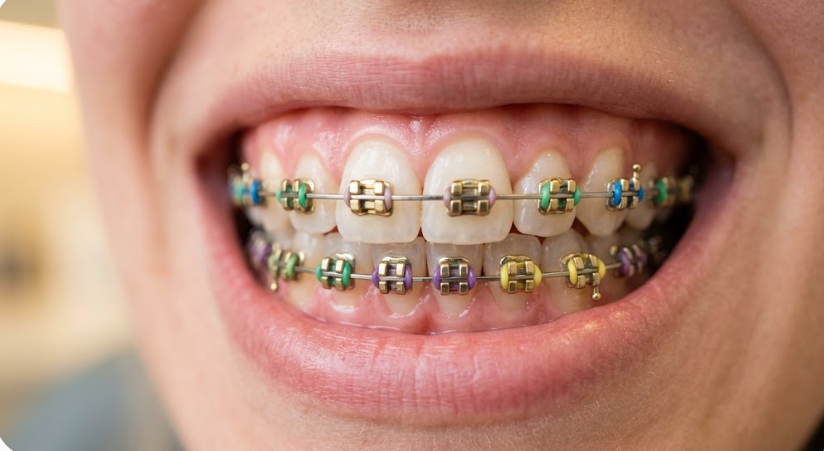
- Customizable Elastic Bands: Offers multiple ligature color choices for personal customization at every visit.
- Precise Tooth Movement: Gives orthodontists complete 3D control over root movement and tooth rotation.
- No Impact on Speech: Does not alter tongue placement or cause lisping like bulky removable alignment trays.
- Stain-Resistant Brackets: Metal surfaces do not discolor when exposed to dark foods, coffee, or tea.
- Universal Applicability: Suitable for patients of all ages, including young children, teenagers, and adults.
- Proven Track Record: Built on decades of clinical orthodontic research and predictable results.
- Minimal Daily Maintenance: Requires no complex removal, washing, or soaking routines before eating.
- Stronger Anchor Point: Provides stable anchoring for auxiliary orthodontic appliances like elastics or expanders.
- No Risk of Misplacement: Impossible to accidentally discard in napkins or leave behind while dining out.
- Consistent Force Application: Works continuously 24 hours a day without depending on patient discipline.
Disadvantages of Brasssmile
- High Visual Prominence: Distinct metallic appearance is clearly visible when talking, laughing, or smiling.
- Dietary Restrictions: Requires avoiding hard, sticky, or chewy foods that can snap off dental brackets.
- Complex Oral Hygiene: Difficult to clean around brackets and wires, requiring extra brushing and flossing effort.
- Risk of Decalification: Higher chance of white spot lesions around brackets if plaque is not cleaned thoroughly.
- Soft Tissue Irritation: Metal edges can rub against cheeks, gums, and lips, causing painful mouth sores.
- Frequent Office Visits: Demands regular dental appointments every 4 to 8 weeks for wire tightening.
- Initial Soreness: Causes temporary dental tenderness for several days after placement and adjustments.
- Inflexible Treatment Routine: Cannot be removed temporarily for special events, photos, or sports.
- Risk of Emergency Repairs: Broken wires or loose brackets require unexpected visits to the orthodontic clinic.
- Food Trapping: Food particles easily get stuck in wires, causing awkward moments after meals.
- Difficulty Flossing: Standard dental floss cannot pass through easily without threaders or water flossers.
- Potential Enamel Scrapes: Requires careful professional removal to prevent minor surface scratches on enamel.
- Increased Plaque Accumulation: Provides more surface area for oral bacteria to cling to compared to bare teeth.
- Sports Safety Concerns: Requires wearing a custom mouthguard during contact sports to prevent lip cuts.
- Initial Adaptation Period: Takes several weeks for the mouth muscles and tissues to get used to the appliance.
for more brasssmile blogs

Leave a Reply