
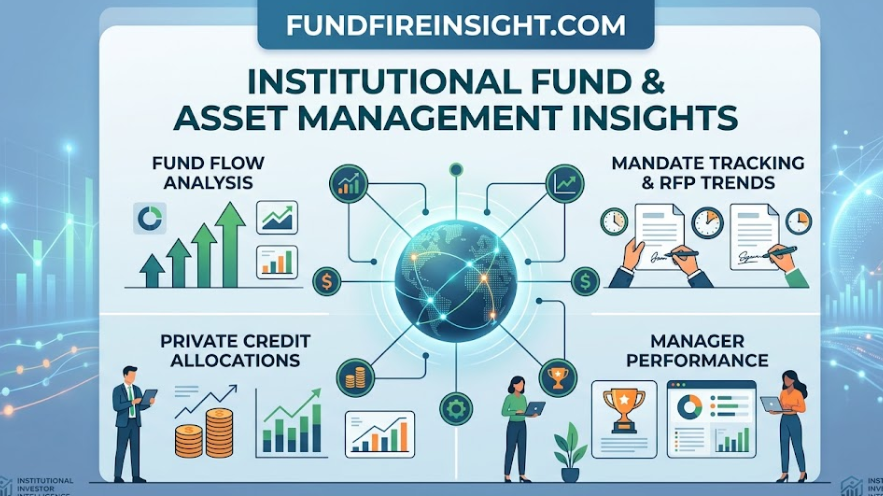
FundFireInsight.com serves as a specialized digital intelligence node designed to bridge the gap between complex institutional asset management data and actionable strategic analysis. For financial professionals, institutional investors, and asset managers, maintaining real-time visibility into market movements, fund performance, and capital flows is critical. FundFireInsight.com consolidates deep industry intelligence, institutional fund metrics, and sector-specific analytics into a single streamlined ecosystem. By analyzing shifting asset allocations, manager moves, and mandate updates, the platform provides institutional decision-makers with the direct, data-backed insights required to optimize portfolio performance, navigate regulatory changes, and identify emerging capital allocation opportunities in an increasingly volatile global market.
Understanding the Institutional Asset Management Landscape
The institutional investment market operates on scale, precision, and speed. Millions of dollars shift based on macroeconomic indicators, regulatory adjustments, and subtle performance trends. Navigating this environment requires dedicated resources capable of filtering out noise and focusing on structural shifts.
Financial markets have moved beyond basic metrics like quarterly trailing returns. Modern asset allocation strategies rely on multi-layered insights, including fund flow dynamics, liquidity risk assessments, and environmental, social, and governance (ESG) integration metrics. Platforms like FundFireInsight.com address this demand by providing comprehensive, structured coverage of these essential investment dimensions.
Core Pillars of Institutional Financial Intelligence
To stay competitive, institutional investors and managers must monitor several critical pillars of financial data:
- Capital Flow Analysis: Tracking where institutional money moves across public equities, private debt, real estate, and hedge funds.
- Mandate & Consultant Activity: Monitoring institutional RFP (Request for Proposal) trends, mandate wins, losses, and consultant recommendations.
- Regulatory Compliance & Risk: Staying updated on shifting SEC, ESMA, and global regulatory frameworks that impact fund operations and liquidity management.
- Manager Selection & Performance: Analyzing risk-adjusted returns, alpha generation, and tracking error across asset classes.
       [ Macroeconomic Indicators ]
                    │
                    ▼
          [ Capital Flow Tracking ]
                    │
       ┌────────────┴────────────┐
       ▼                         ▼
[ Institutional Mandates ]  [ Regulatory Updates ]
       │                         │
       └────────────┬────────────┘
                    ▼
        [ Fund Fire Insight Node ]
Strategic Advantages for Investment Professionals
1. Real-Time Mandate and RFP Tracking
Asset managers depend on early intelligence regarding institutional mandate searches. When pension funds, endowments, or sovereign wealth funds rebalance their holdings, early access to this information provides a distinct competitive advantage. Detailed tracking ensures manager selection teams stay ahead of sector shifts.
2. Competitor Benchmarking
Understanding competitor placement, fee structures, and inflows allows fund managers to position their investment vehicles effectively. Comparative analysis helps identify under-allocated sectors, market gaps, and changing institutional investor preferences.
3. Macroeconomic Integration
Isolated data points rarely yield actionable conclusions. Contextualizing performance within broader macroeconomic trends—such as central bank policy adjustments, yield curve shifts, and inflation metrics—gives asset allocators a clearest view of market directional risk.
Emerging Trends Reshaping Institutional Allocations
The institutional asset management landscape is undergoing a structural shift driven by technology, private market expansion, and evolving risk models.
| Trend | Market Impact | Institutional Focus |
| Private Credit Growth | Shift away from traditional public fixed income | Direct lending, mezzanine finance, distressed debt |
| Data Automation | Integration of machine learning in risk models | Real-time liquidity tracking, algorithmic execution |
| Customized SMAs | Rise in Separately Managed Accounts over pooled funds | Direct indexing, tailored tax & ESG overlays |
| Illiquidity Premiums | Higher allocations to real assets and infrastructure | Renewable energy, digital infrastructure, real estate |
Private Credit and Alternative Assets
Private credit has emerged as a core allocation strategy for institutions seeking higher yields amid public market volatility. Institutional platforms track private market allocations, transparent fee structures, and deal flow metrics to evaluate risk-adjusted returns across market cycles.
Technology and Predictive Analytics
Modern asset managers rely on advanced analytics to parse large datasets quickly. Utilizing centralized platforms like FundFireInsight.com ensures that research teams reduce operational friction and dedicate more resources to portfolio strategy and client management.
Optimizing Information Workflows for Financial Leaders
To turn market intelligence into measurable outcomes, investment committees and analytical teams must integrate incoming market data directly into their decision-making frameworks.
- Establish Clear Allocation Benchmarks: Define target returns, risk tolerance levels, and liquidity requirements before analyzing manager performance data.
- Standardize RFP Processes: Utilize centralized mandate insights to target institutional searches that align directly with firm expertise.
- Continuous Risk Monitoring: Monitor regulatory updates and liquidity metrics constantly to protect capital during periods of heightened market stress.
- Leverage Sector Specialization: Focus on deep, industry-specific analysis rather than surface-level financial commentary.
Frequently Asked Questions (FAQs)
What is FundFireInsight.com?
It is a dedicated platform delivering financial intelligence, fund flow analysis, mandate tracking, and strategic performance metrics for institutional asset managers and financial professionals.
Why is mandate tracking important for asset managers?
Mandate tracking provides early insight into institutional RFP searches and asset allocation changes, allowing asset managers to position their funds for new capital placement.
How do private market assets factor into institutional intelligence?
Private markets—including private credit, private equity, and real assets—require deep, specialized data due to their illiquid nature. Specialized intelligence platforms help investors evaluate risk, deal structures, and illiquidity premiums accurately.
How often should investment teams review capital flow metrics?
Capital flow metrics should be reviewed continuously or on a weekly/monthly basis to identify sector shifts, changing investor sentiment, and emerging liquidity trends early.
How does institutional fund analysis differ from retail fund research?
Institutional research focuses on large-scale capital movements, custom fee structures, Separately Managed Accounts (SMAs), regulatory compliance, and complex risk-adjusted return metrics, whereas retail research focuses primarily on simple trailing returns and public mutual fund options.
Leave a Reply