Switching to solar energy used to feel overwhelming—full of complex jargon, endless paperwork, and confusing hardware choices. But with the rise of modern InstaPV (instant photovoltaic) systems, generating your own clean power has become far more straightforward, reliable, and accessible for homeowners and businesses alike.
Whether you want to cut down monthly utility bills, protect your home from sudden power grid blackouts, or lower your carbon footprint, understanding how an InstaPV setup works is your first step toward long-term energy independence and lower net energy costs.
What Exactly is an InstaPV System?
At its core, an InstaPV setup is a modular, high-efficiency solar power system engineered for rapid deployment. Instead of forcing you to hunt down individual parts from different manufacturers, these integrated packages bring together everything you need to harvest solar radiation and convert sunlight into safe, usable household electricity.
The transformation happens right on your roof or open property ground:
- Solar Radiation Absorption: Photovoltaic cells absorb photons from ambient sunlight during daylight hours.
- The Photovoltaic Effect: Absorbed light excites electrons within silicon wafers, triggering electron flow and generating direct current (DC) power.
- Power Conversion: The raw DC current flows through specialized inverter technology, converting it into grid-compliant alternating current (AC) electricity for immediate power consumption.
Essential Hardware Components of an Efficient System
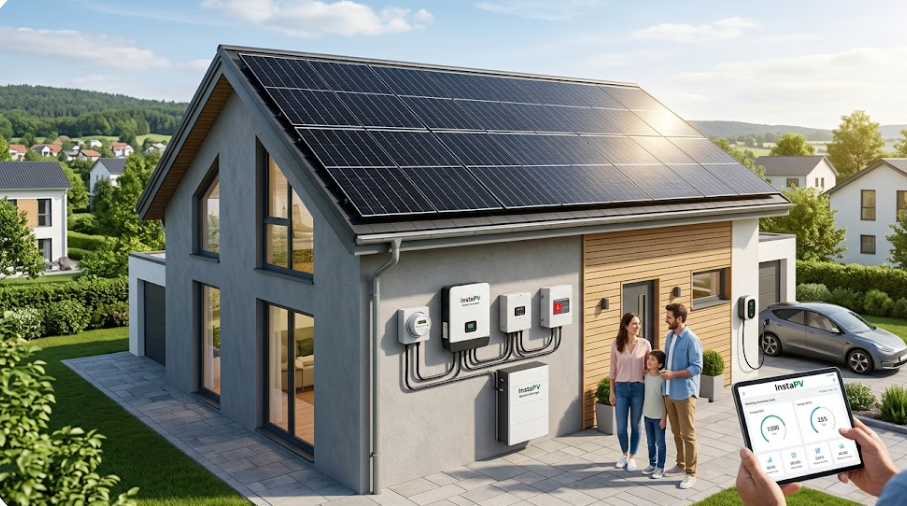
To help you visualize how your installation turns sunlight into electrical power, let’s break down the main hardware elements that make an InstaPV system perform smoothly day in and day out:
- Monocrystalline Photovoltaic Panels: Acting as your primary solar array, high-efficiency PERC modules maximize power output per square foot, making the most of limited roof space.
- Smart Power Inverters: Solar panels produce DC power, but everyday appliances run on AC electricity. Modern string inverters, microinverters, or hybrid multi-mode units handle this power conversion continuously while minimizing system voltage losses.
- Maximum Power Point Tracking (MPPT) Controllers: MPPT algorithms act like an automatic transmission for your array. They constantly optimize current and voltage levels to extract maximum solar wattage, even during overcast afternoons.
- Solar Energy Storage Solutions: If you want electricity after sunset, a Lithium Iron Phosphate (LiFePO4) battery bank stores your daytime surplus so you can tap into back-up power when grid electricity rates peak or blackouts occur.
- Balance of System (BOS) Equipment: Includes heavy-duty aluminum mounting racks, UV-resistant DC cabling, rapid shutdown safety switches, circuit breakers, and grounding wires built to withstand severe weather.
Off-Grid vs. Grid-Tied vs. Hybrid: Which Solar Setup Fits You?
Choosing the right solar configuration comes down to local power grid reliability, project budget, and personal energy production goals. Here is how the primary design options compare:
| Technical Feature | Grid-Tied Configuration | Off-Grid Setup | Hybrid PV System |
|---|---|---|---|
| Ideal Application | Lowering electric bills in connected urban areas | Remote cabins or locations lacking grid access | Complete home energy security & emergency backup |
| Grid Interconnection | Full utility grid connection | Completely isolated standalone system | Connected to utility grid + battery storage |
| Power Outage Backup | Shuts down automatically for safety | Continuous 24/7 battery-powered operation | Instant automatic backup power transfer |
| Net Energy Metering (NEM) | Sells excess electricity back to utility | Not applicable | Sells surplus power while preserving storage |
| Levelized Cost of Energy | Lowest upfront investment cost | Higher (requires large battery bank) | Highest long-term economic value |
Step-by-Step InstaPV Installation and Design Workflow
Installing a reliable solar array requires precise planning, structural assessment, and proper electrical wiring to ensure maximum system efficiency:
- Solar Site Assessment & Load Profiling: Engineers evaluate roof tilt angle, structural integrity, and shading patterns while reviewing past electricity bills to calculate daily kilowatt-hour (kWh) demand.
- System Sizing & Array Design: Technicians determine the optimal panel count, array DC-to-AC ratio, and matching inverter capacity to prevent power clipping during peak sunlight hours.
- Mounting Racking Installation: Corrosion-resistant aluminum mounting rails are secured to roof rafters using leak-proof waterproof flashing seals.
- Panel Mounting & String Wiring: Photovoltaic panels are locked onto the racking system and wired in series or parallel to hit the target DC operating voltage window.
- Inverter & Safety Switch Integration: The central inverter is mounted near your service entrance, connected with DC isolation switches, and wired into your main electrical distribution panel.
- System Grounding & Utility Interconnection: Grounding wires route potential electrical fault currents into the earth, followed by open-circuit voltage (Voc) testing before system activation.
Key Semantically Related Solar Concepts to Keep in Mind
When planning your solar installation, you will come across several core industry terms that directly affect energy yield and investment returns:
- Solar Irradiance: The measure of solar power per unit area (W/m2) received at your property’s specific geographic location.
- Net Energy Metering (NEM): A billing mechanism where your electric utility credits you for feeding surplus solar electricity back into the public grid.
- Temperature Coefficient: A metric showing how panel power output declines when outdoor temperatures exceed 25∘C (77∘F)—highlighting the need for proper panel ventilation.
- Microinverters vs. Central Inverters: Central string inverters process total array power at one point, whereas module-level power electronics (MLPE) like microinverters optimize output panel by panel, eliminating shading bottlenecks.
Simple Tips to Maximize Solar Output & Efficiency
Once your InstaPV array is operational, keeping it running at peak generation capacity requires minimal maintenance. Following a few routine practices ensures steady energy yield over a 25+ year system lifespan:
- Prevent Dust and Soiling Losses: Dirt, pollen, leaves, and bird droppings obscure light absorption, causing generation losses of up to 15%. A gentle rinse with clean water every few months restores full light transmission.
- Manage Shading Obstructions: Keep nearby tree branches trimmed so your panel array receives direct, uninterrupted sunlight during peak irradiance hours (10 AM to 4 PM).
- Maintain Array Air Ventilation: Leave a 4-to-6-inch air gap beneath your solar panels. Convective airflow prevents heat buildup, keeping panel operating temperatures lower and voltage output high.
- Monitor Generation via Smart Mobile Apps: Most modern system setups feature real-time cloud monitoring tools. Checking performance metrics weekly helps you spot string imbalances or ground faults early.
Frequently Asked Questions (FAQs)
Q: How long does an InstaPV solar setup typically last?
A: Quality solar panels are built for long-term durability. Most tier-1 manufacturers provide a 25-year performance warranty guaranteeing 80% to 85% of original output power. Inverters and battery storage systems typically carry 10 to 15-year lifespans before needing standard maintenance or replacement.
Q: Will my solar system produce electricity on rainy or overcast days?
A: Yes! Photovoltaic panels generate power from both direct and diffuse solar radiation. While total output drops on heavily overcast days—typically operating at 10% to 25% of peak capacity—the system continues producing clean energy whenever daylight is present.
Q: What happens to my solar power supply during a public grid blackout?
A: Standard grid-tied systems without batteries automatically shut down during blackouts to protect utility lineworkers from anti-islanding hazards. However, if you install a hybrid or off-grid InstaPV configuration with battery storage, your system switches to island mode to power essential household loads seamlessly.
Q: Is maintenance difficult or expensive for residential installations?
A: Not at all. Because photovoltaic systems have no moving mechanical parts, operational wear is minimal. Periodic visual inspections, occasional panel surface cleaning, and app-based monitoring are usually all that is required to maintain top output.
Final Conclusion
Transitioning to solar power doesn’t have to be complicated. Investing in a properly designed InstaPV system gives you complete control over your home energy consumption, shields your household from rising utility rates, and establishes a sustainable energy foundation for decades.
By assessing your household energy demand, choosing the right system architecture, and pairing quality photovoltaic panels with optimized inverter tech, you can turn daily sunlight into a reliable financial asset. Take time to review your roof layout, check your daily kWh usage, and take your first step toward clean, self-generated power today.
Leave a Reply