
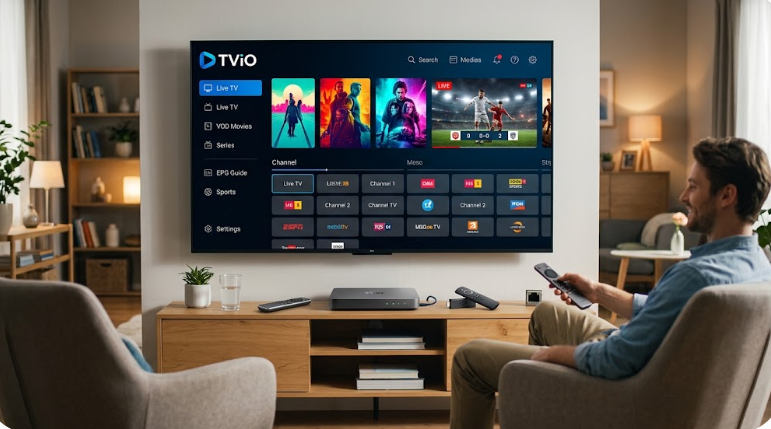
The home entertainment landscape has undergone a monumental shift toward digital-first streaming. As cord-cutting accelerates globally, traditional cable and satellite packages are increasingly being replaced by internet-protocol-based viewing solutions. In this modern digital ecosystem, terms like tvlio (and its close media player variation, TViO) have emerged as focal points for users looking to optimize their digital television and streaming experiences.
Whether you are exploring tvlio as an internet-based television setup or leveraging media application frameworks to organize digital channels, understanding how this technology works, its core features, and its performance capabilities is crucial.
What Is TVLIO?
At its core, tvlio is closely associated with IPTV (Internet Protocol Television) and modern internet-delivered media solutions. Unlike traditional broadcasting—which relies on physical cables, satellite dishes, or over-the-air radio towers—tvlio technology utilizes standard internet protocol networks to transmit video streams directly to compatible screens.
It is important to distinguish between the architecture and the application:
- IPTV: The overarching underlying technology standard used to stream live TV and on-demand content over IP networks.
- TVLIO / TViO: Terms representing specific platforms, streaming setups, or high-performance media players designed to parse, organize, and play digital streams seamlessly on living room devices.
How TVLIO Technology Operates
The operational architecture behind tvlio relies on a steady, real-time data connection between a content source and a media player interface.
[Content Source / Playlist] ---> [IP Network Transmission] ---> [TVLIO Application] ---> [Smart TV / Streaming Display]
Key Technical Requirements
To run a tvlio setup efficiently without buffering or frame drops, the following setup components are necessary:
- High-Speed Internet Connection: A baseline speed of 15–25 Mbps for standard HD streams, and 50+ Mbps for ultra-high-definition (4K) content.
- Compatible Streaming Hardware: Android TV boxes, Amazon Fire TV Sticks, Smart TVs, or desktop/mobile platforms.
- A Media Player or Client Application: Software optimized to handle stream parsing, electronic program guides (EPG), and video decoding.
- Authorized Data Sources: Valid playlists, server logins, or personal content feeds.
Key Features of TVLIO Platforms
Modern streaming applications associated with tvlio offer advanced functionality designed for big-screen navigation and smooth media management.
- Live TV Integration: Stream real-time broadcast television, including news networks, live sports events, and regional channels.
- Electronic Program Guide (EPG): Displays an interactive channel grid showing current and upcoming shows, allowing users to browse schedules effortlessly.
- Video on Demand (VOD): Integrated content hubs for movies, television series, and catch-up programming.
- Multi-Device Synchronization: Companion dashboards that sync account data, source settings, and preferences across TVs, smartphones, and web browsers.
- 4K UHD Support: Built-in video engine capabilities capable of rendering high-bitrate video formats when supported by the display and bandwidth.
Device Compatibility & Setup Ecosystem
One of the biggest strengths of the tvlio environment is platform versatility. It is built to operate smoothly across multiple hardware ecosystems:
| Hardware Type | Supported Operating Systems | Key Advantages |
| Smart TVs | Android TV, Google TV, Samsung Tizen, LG webOS | Native remote navigation, clean living room interface. |
| Streaming Sticks | Amazon Fire TV, Apple TV, Chromecast | Highly portable, dedicated processing power. |
| Mobile & Tablets | Android OS, Apple iOS / iPadOS | Flexible viewing on the go with touch navigation. |
| Computers | macOS, Windows, Linux (via Web Dashboard) | Easy source configuration and library management. |
Best Practices for Optimizing TVLIO Performance
To maintain stutter-free playback and sharp visual quality while streaming, consider following these optimization tips:
- Use Ethernet Connections: While Wi-Fi is convenient, plugging an Ethernet cable directly into your Smart TV or streaming box drastically reduces latency and packet loss.
- Clear Application Cache: Regularly purging temporary cache files in your app settings helps prevent menu slowdowns and streaming stutter.
- Optimize Router Settings: Assign Priority (QoS) to streaming devices within your local router settings to prioritize video traffic over background network downloads.
- Select Suitable Video Bitrates: If operating on limited bandwidth, adjust the playback settings from 4K to 1080p to conserve data and prevent buffering.
Frequently Asked Questions (FAQs)
- What is TVLIO?TVLIO is a digital entertainment concept and term linked to internet protocol television (IPTV) and high-performance streaming applications designed for modern media devices.
- Is TVLIO an IPTV service or a media player?While the term is used online in connection with IPTV streaming, software platforms under variations like TViO act specifically as high-performance media players and companion applications where users manage their own content sources.
- Does TVLIO require high-speed internet?Yes. Stable streaming requires a consistent broadband connection—ideally 15–25 Mbps for standard HD and 50+ Mbps for 4K video feeds.
- Can I use TVLIO across multiple devices?Yes, most compatible setups and companion applications allow sync across Smart TVs, Firesticks, mobile phones, and web companion dashboards.
- How do I prevent buffering on TVLIO streams?Connecting via a wired Ethernet cable, closing idle background apps, clearing device cache, and ensuring sufficient internet speed are the best ways to eliminate buffering.
Leave a Reply