
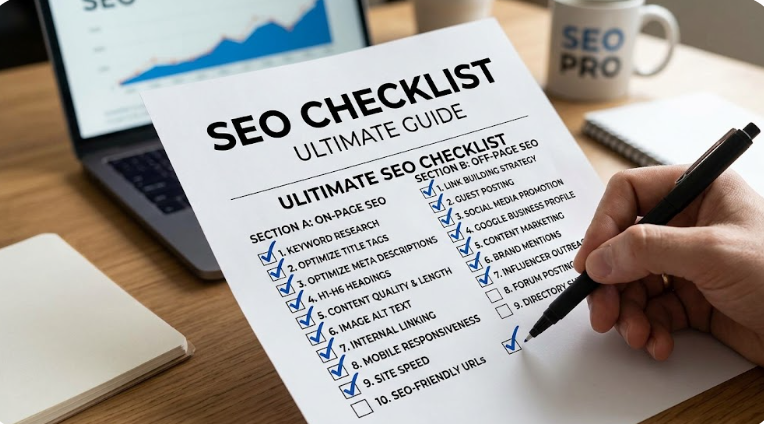
Mastering Search Engine Optimization (SEO) requires balancing both structural site improvements and off-site signals. Below is a comprehensive, actionable checklist covering the core pillars of On-Page and Off-Page SEO designed to improve search visibility, enhance user experience, and drive qualified organic traffic.
On-Page SEO Checklist
On-Page SEO focuses on optimizing elements directly on your website to help search engines understand your content while providing a seamless user experience.
1. Content & Keyword Optimization
- Target Keyword Placement: Include your primary keyword in the first 100 words of the page, the main
<h1>title, at least one<h2>subheading, and naturally throughout the body content. - Search Intent Alignment: Match content depth and format to what users expect (informational guides, transactional product pages, or comparison lists).
- Comprehensive Coverage: Use secondary and semantically related keywords (LSI) to cover topics thoroughly without keyword stuffing.
- Content Freshness: Regularly review, update, and expand aging pages with new statistics, updated insights, and revised multimedia.
2. Title Tags & Meta Descriptions
- Unique Title Tags: Ensure every page has a unique title tag under 60 characters, placing primary keywords near the beginning.
- Compelling Meta Descriptions: Write click-worthy descriptions between 120–155 characters that include the target keyword and a clear Call to Action (CTA).
3. URL & Headings Structure
- SEO-Friendly URLs: Keep URLs short, descriptive, lowercase, and separated by hyphens (e.g.,
[domain.com/seo-checklist](https://domain.com/seo-checklist)). - Heading Hierarchy: Use only one
<h1>tag per page for the main title, followed by structured<h2>,<h3>, and<h4>tags for sub-sections.
4. Media & Image Optimization
- Descriptive File Names: Use plain, keyword-focused image file names (e.g.,
on-page-seo-guide.pnginstead ofIMG001.png). - Alt Text: Add concise alternative text (alt text) for every image to improve accessibility and aid image search rankings.
- Format & Compression: Use modern formats like WebP or AVIF and compress images to maintain fast page load times.
5. Technical & Structural On-Page Factors
- Internal Linking: Link to relevant internal pages using descriptive anchor text to distribute link equity and establish topical authority.
- External Links: Link out to authoritative, trustworthy sources to substantiate claims and add value.
- Mobile Responsiveness: Ensure the page scales cleanly across all desktop, tablet, and mobile device viewport sizes.
Off-Page SEO Checklist
Off-Page SEO encompasses actions taken outside of your site to build domain authority, trust, and brand presence across the broader web.
1. Link Building Strategies
- Guest Posting: Pitch high-quality, relevant websites within your niche to publish articles that include contextual links back to your core pages.
- Broken Link Building: Identify broken links on authoritative industry resource pages and suggest your content as a working replacement.
- Unlinked Brand Mentions: Monitor web mentions of your brand or tools and request that site owners convert static text mentions into clickable backlinks.
- Competitor Backlink Analysis: Audit backlink profiles of top-ranking competitors to uncover outreach opportunities and content gaps.
2. Digital PR & Brand Signals
- Press Releases & Media Coverage: Share major company announcements, research reports, or unique tools with industry journalists and media outlets.
- Thought Leadership: Publish original insights, survey data, or industry studies that naturally earn organic editorial links from news sites and bloggers.
3. Local SEO & Directory Listings (If Applicable)
- Google Business Profile (GBP): Claim, verify, and complete your Google Business Profile with accurate NAP (Name, Address, Phone Number) data.
- Niche Citation Directories: Submit your business details to respected local directories and industry platforms to build local trust signals.
4. Social & Community Engagement
- Content Distribution: Share newly published articles across relevant professional platforms (LinkedIn, Twitter/X, specialized forums) to generate initial traffic signals.
- Community Participation: Engage meaningfully in industry discussions (Quora, Reddit, niche forums) to direct target users to helpful resources on your site.
Quick-Reference Checklist Summary
| SEO Pillar | Focus Area | Essential Task |
| On-Page | Content | Align content depth with user search intent and primary keywords |
| On-Page | Metadata | Optimize unique Title Tags and Meta Descriptions per page |
| On-Page | Architecture | Implement logical heading hierarchy (<h1>–<h3>) and internal links |
| On-Page | User Experience | Compress images, add descriptive Alt Text, and ensure full mobile responsiveness |
| Off-Page | Backlink Acquisition | Conduct outreach for guest posts, broken link updates, and competitor backlink gaps |
| Off-Page | Brand Signals | Leverage Digital PR, original research, and consistent citations to build domain trust |
Leave a Reply